
Crossing the Bridge Between Indie Films and Theatrical Distribution
What happens when the lights of the cinema go out, but the stories keep burning?


The Golden Era … and the Hard Pivot
There was a time, still vivid in my memory, when art house theaters weren’t rare curiosities but vibrant pillars of cultural life. In the 1970s and ’80s, revival houses across cities like Manhattan screened films that mainstream audiences rarely saw: from foreign classics to underground gems. Those theaters, a patchwork of intimate storefronts and ornate second-run palaces, were destinations, not relics.
Fast-forward to now: you still have art houses, yes. Some big-box multiplexes even host “indie runs.” But let’s face reality, most indie films die in the streaming abyss. In the U.S., 40% of independent narrative features made in 2017 never saw a theatrical release, and another 35% had only nominal runs, with no reported box office to show for it. At best, only about 25% reported any meaningful theatrical earnings. Meanwhile, on the festival circuit, films may tour 40 or 50 festivals, yet never get a real screening beyond those venues.
To put it plainly: art house theaters linger, but the journey from festivals-to-distribution is more labyrinth than highway. For every film that speaks to crowds under marquee lights, there are dozens that vanish into login screens.
America’s Dead Screens
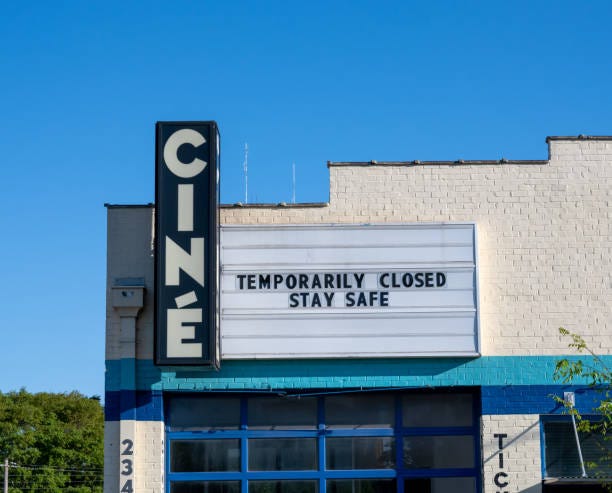
I’ve been across the United States more times than I can count, film festivals, production trips, scouting runs, just driving cross-country because that’s part of my rhythm. And every trip, without fail, I find myself staring at another dead theater. A faded marquee. A boarded-up box office. A place that once held the collective breath of a town, now silent.
It’s devastating as both a filmmaker and a fan. I grew up with the theater as a sacred space, a temple. Now, in towns big and small, the temple is gone.
And yet, there’s a pulse underneath all that silence. Across the U.S. and abroad, there are individuals and organizations working to reimagine cinema, not just as nostalgia, but as living, breathing culture.
A Wave, Not a Race
Here’s the truth: this isn’t a race. It isn’t about one company or one initiative “winning” the future of cinema. It feels bigger than that. It feels like a wave, people in different cities, countries, and contexts catching the same energy at the same time. Some are already in motion, some are just beginning, but the movement is there.
I’ve had so many conversations with brilliant, passionate people who see this too. And I know I have more lined up. The list keeps growing, like a tide I’m just trying to ride alongside.
Efforts Already Underway
Europe Leading with Infrastructure
Europa Cinemas Organization
This initiative has proven that with coordinated support, independent theaters can thrive. They’ve successfully created funding and programming systems that keep indie and arthouse cinemas alive across the continent.
New U.S. Experiments
Attend Theatrical Marketplace, Inc — Jackie Brenneman & John Fithian
Their work is about bridging filmmakers and theater operators directly. Though they haven’t responded to my outreach yet, their ideas—split screens, dynamic pricing, mystery Mondays, localized marketing, speak to the same hunger I feel.
“We believe in the growth of cinema attendance. With the strong support of our exhibitor partners and our committed filmmakers, we are helping to make it happen!” – John Fithian & Jackie Brenneman
Theaters Holding the Line
Here’s a growing directory of places, both in the U.S. and abroad, that continue to carry the flame. Some are historic landmarks, others grassroots microcinemas, but all are proof that the spirit of moviegoing isn’t gone.
U.S.
Pacific Northwest & West Coast
Grand Illusion (Seattle, WA)
Northwest Film Forum (Seattle, WA)
The Beacon (Seattle, WA)
SIFF Cinema (Seattle, WA)
The Grand Cinema (Tacoma, WA)
Cinema 21 (Portland, OR)
Hollywood Theatre (Portland, OR)
Laurelhurst Theater (Portland, OR)
Tower Theatre (Sacramento, CA)
Crest Theatre (Sacramento, CA)
Shapeshifters Cinema (Oakland, CA)
The Dreamland Cinema (Oakland, CA)
Secret Movie Club (Los Angeles, CA)
LA Microcinemas: filmjourn Micro, Be Kind Rewind, CineFile Video, Whammy! Analogue, Videotheque, Brain Dead Studios, Mubi Microcinema @ Vidiots, Video Archives @ The Vista
Midwest & South
Ragtag Cinema Café (Columbia, MO)
Screenland (Kansas City, MO)
The Plaza Theatre (Atlanta, GA)
The Tara (Atlanta, GA)
Northeast & Other
Somerville Theatre (Boston, MA)
Edmonds Theater (Edmonds, WA)
Lynwood Theater (Bainbridge Island, WA)
Southeast
Fine Arts Theatre (Asheville, NC)
Asheville Pizza and Brewing Company (Asheville, NC)
Grail Moviehouse (Asheville, NC)
Canada (Toronto)
Revue Cinema
The Royal Cinema
Paradise Theatre
Fox Theatre
Imagine Cinemas
CineCycle
Kingsway Theatre
Regent Theatre
Argentina (Buenos Aires)
Cine Lorca
Cine Gaumont
Cine Cosmos
Sala Lugones (within the San Martín Theatre)
MALBA Museum (Museo de Arte Latinoamericano de Buenos Aires)
Centro Cultural Recoleta
Centro Cultural Borges
Personal Anchor Points
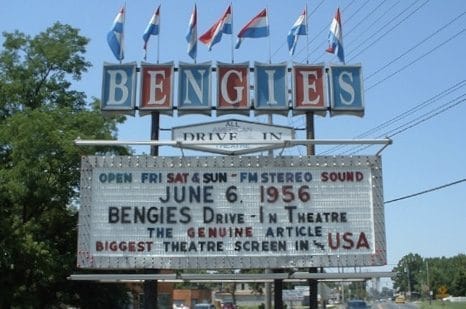
For me, Benji’s Drive-In in Baltimore will always be a sacred temple. That’s where the magic of cinema lives, even if the world wants to forget it. But on a practical level, the Giunti Odeon in Florence has become my North Star.
The Giunti Odeon, Florence
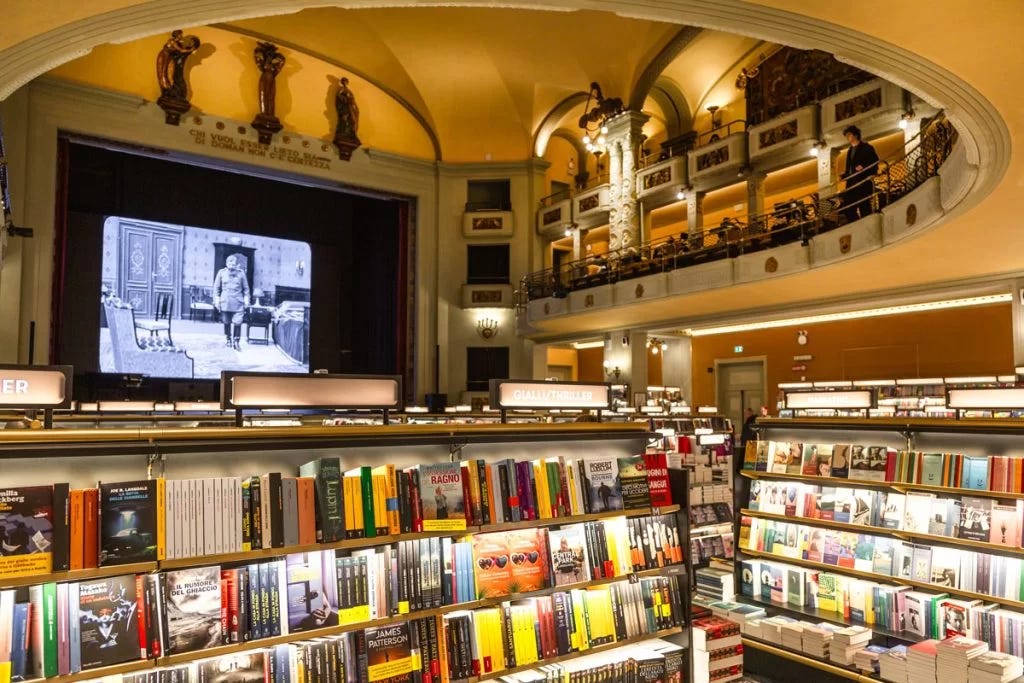
Housed within the Palazzo dello Strozzino, originally built in the 15th century, the Odeon was transformed into a cinema in 1922. It quickly became one of Florence’s most important cultural spaces, hosting premieres, festivals, and even legendary concerts like Ella Fitzgerald and Louis Armstrong. Its interior, gilded columns, frescoes, stained glass dome, still glows with the spirit of cinema’s golden age.
In 2023, the space was reborn as the Giunti Odeon, a blend of cinema, bookstore, and café. Today, visitors can browse more than 25,000 books, sip coffee under that stained-glass dome, attend author events, and still gather for nightly screenings of international films in their original language. It’s become Florence’s top cinema for ticket sales while also functioning as a literary and cultural hub.
The Giunti Odeon proves what I’ve long suspected: theaters don’t have to be mausoleums of the past. They can be cathedrals of the present, spaces where art, literature, conversation, and cinema overlap. That ethos is the blueprint for what I call Indy Odeon.
Indy Odeon: A Concept IP
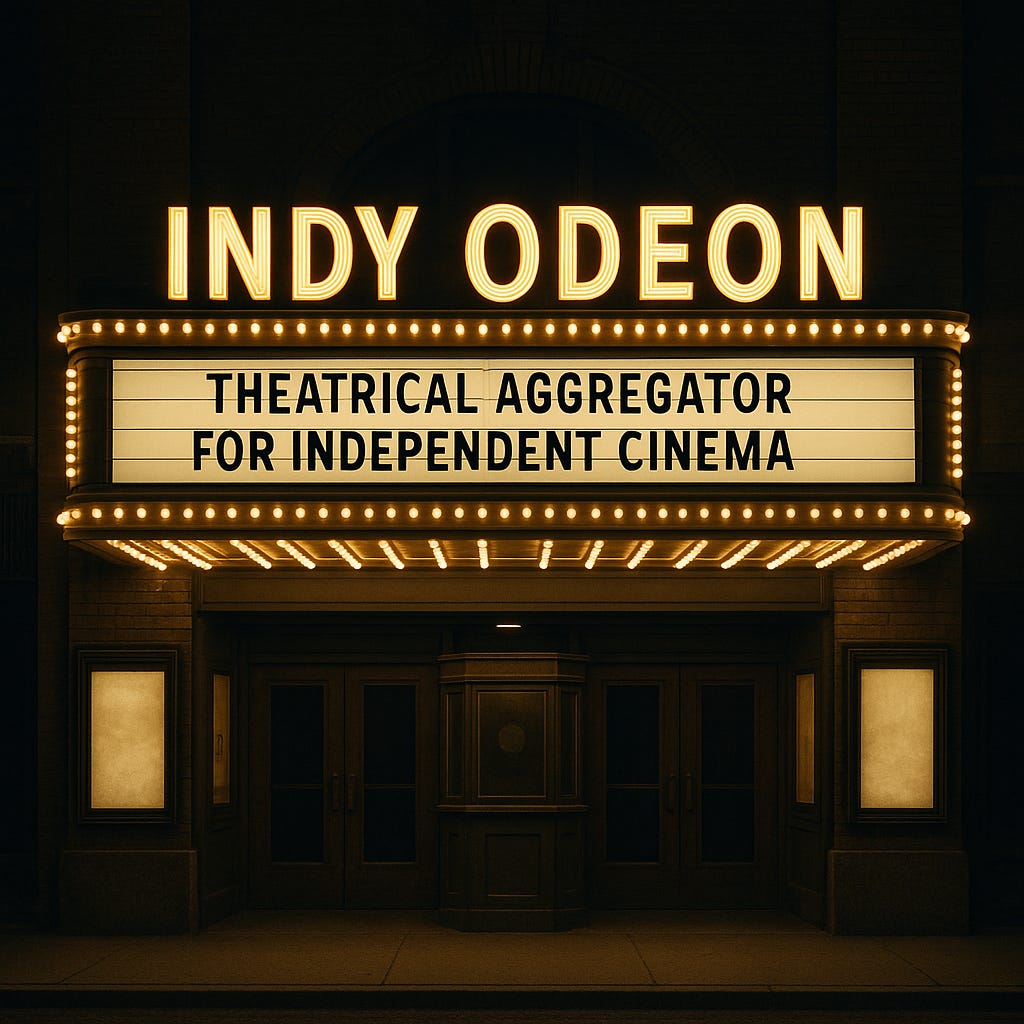
The seed of this whole idea is simple: we need a bridge. A way to move indie films off the endless festival circuit and out of the streaming void, and into the places where audiences actually gather. That’s where Indy Odeon comes in - a theatrical aggregator for independent cinema in the modern age. Not just a booking system, but a banner, a coalition, a recognizable IP concept that theaters and filmmakers can rally behind.
Option 1: The Aggregator Model
Take for example Filmhub. They’ve proven that filmmakers will show up if you give them a clear road into distribution. The only problem is that their model feeds directly into streaming platforms. It’s a warehouse - efficient, yes, but isolating.
Now imagine Indy Odeon as a Filmhub for theaters. You have a film. You upload it. You provide the basics - poster, artwork, accolades, closed captions. Indy Odeon inventories it, organizes it by genre, and then goes to work. Instead of platforms browsing the warehouse, it’s theater owners - arthouses, microcinemas, even a handful of big-box venues willing to experiment - looking for fresh content.
Through this system, a filmmaker could land a 5 to 10 city booking. Think of it like a band’s booking agent: routing a national tour, slotting the right venues, negotiating the run. One hub, multiple screens, direct theatrical exposure.
Option 2: The Touring Festival Model
This approach leans into the idea of curation. Indy Odeon becomes a kind of rolling film festival - but instead of being stuck in Park City, Austin, or Toronto, it moves city to city.
Here’s how it works: Indy Odeon selects ten films each month out of the pool of submissions. These are the ones that have just come off the festival circuit, the ones that have heat but no runway. Indy Odeon then strikes a deal with arthouse theaters in ten key cities across the country. Each city gets a two-week run, with all ten films playing in rotation.
What you’ve built here is a national conversation. Suddenly audiences in Atlanta, Seattle, Portland, and Boston are all seeing the same set of indies, at the same time, under the same banner. It’s a cultural wave - not one-off screenings, but a coordinated rollout that mirrors the touring energy of a band hitting the road.
Option 3: The Grassroots Pilot Model
This one is the “we have no money” start-up approach - the scrappy version. It starts with just one theater. A single arthouse willing to collaborate.
Here, Indy Odeon operates more like a subscription club. You sign up for a monthly membership, and in return you get access to two to four screenings a month. These aren’t old catalog titles - they’re fresh indies just coming off festivals, films you’d normally never get to see in your town.
It grows slow, but it grows steady. One city, then two, then ten. The dream is that a membership works nationwide. So if you’re an Indy Odeon subscriber in Asheville and you fly to Seattle, your card still gets you into screenings there. It becomes a passport for indie film, a network that rewards loyalty and grows by word of mouth.
Option 4: The Odeon Hub Model (The Dream)
This is the big swing, the one that combines everything above. Indy Odeon doesn’t just function as an aggregator or a festival partner. It becomes a physical brand.
The idea is to take a run-down, closed theater - and bring it back to life. Rehab it. Put the Indy Odeon name on the marquee. But don’t stop at films. Turn it into a hub: coffee shop, bookstore, café tables in the lobby, creative commons space upstairs.
From there, replicate. Think of it like a mom-and-pop franchise: locally owned, locally run, but all flying the Indy Odeon flag. Each location becomes a cultural anchor, modeled after the Giunti Odeon in Florence - a place where cinema isn’t a one-off event, but part of daily life.
It’s a dream, yes. The most expensive option. But it’s also the most scalable in spirit. It says: this isn’t just about distribution, this is about identity. Indy Odeon becomes the modern-day arthouse chain that never existed - one built by and for independent filmmakers.
Additional Resources
Rivoli Theater – Bologna, Italy
Operating since the 1930s, the Rivoli has built a reputation for carefully curated programming that blends international arthouse releases with retrospectives and debates. It thrives by staying deeply engaged with local audiences while keeping a global perspective.
Malverne Cinema – Malverne, NY
A Long Island institution since the 1920s, Malverne Cinema mixes arthouse films with select blockbusters and community events. It has endured by creating a neighborhood feel while programming for cinephiles, proving that smaller theaters can survive through hybrid models and grassroots loyalty.
Art House Convergence Map – U.S. & International
This living map catalogs hundreds of indie theaters worldwide, while Art House Convergence itself provides advocacy, conferences, and training for theater operators. It’s one of the most valuable directories for anyone trying to get independent films back onto screens.
IndieScene Venues Database – Global
An evolving database of cinemas, microcinemas, and cultural spaces, IndieScene captures where indie film actually lives today. Unlike static directories, it reflects real-time grassroots activity: community centers, pop-up venues, film collectives. It’s a reminder that indie cinema’s survival often depends on nontraditional venues.
The Honest Questions
Of course, big questions remain:
How does the company make money?
How do filmmakers get paid fairly?
How do these spaces sustain themselves?
I don’t have all the answers yet. But I know this: cinema matters. Community matters. And if we can bridge indie films back to theaters, we can build something lasting.
Closing
For now, I’m gathering intel, growing the list, and dreaming out loud. I’m a filmmaker first, and this is something I can only build piece by piece. But if it’s going to work, it will require a coalition. A wave of us, not just one.
If you know of a theater, an idea, or an organization that belongs here, please reach out.
.
The 19th Street Theatre in Allentown, PA is an indie and foreign film spot.
Did you say, "drive-ins"?! 🤣 My apologies, but I have this irrational love over drive-in theaters. My personal experiences of India Film is VHS or DVD, but anything that can keep drive-in cinema alive has my vote!!! 😃🤣